
Look at architecture in London and it’s usually easy to roughly guess the date. Likewise much art can be categorised but perhaps not portraiture.
Jan van Eyck died in 1441 in Bruges, a hundred and thirty years before Caravaggio was born in 1571 in Milan. (He died in Tuscany in 1610.) Florentine, Bronzino, 1503-1572, fell between them as did Hans Holbein the Younger. All are accomplished portraitists and some conservative contemporary artists, the type I like, aspire to achieve even partially the likenesses they captured almost five hundred years ago. I remember a cracking Bronzino exhibition at the Palazzo Strozzi (Florence) in 2011 and at the end of next year the London National Gallery have a stonker and they blow their own trumpet fortissimo.

“For the first time in history, see all of Jan van Eyck’s portraits together. Only once, only at the National Gallery.
Portraiture as we know it begins with van Eyck. His vision and skill launched painting into a new era of unrivalled realism.
Watchful eyes, a hint of stubble, wrinkles, flushed cheeks. Van Eyck captured his subjects in all their intimate details. Though these people sat for their portraits 600 years ago, they feel alive today.
‘Van Eyck: The Portraits’ brings together from across Europe all nine of the artist’s known painted portraits, making up half of his surviving works worldwide.
Breathing life into van Eyck’s world, the exhibition introduces the men and women he spent his life around. They are not kings, queens and aristocrats; they are successful craftsmen, merchants and the artist’s relatives. This is a story of people. This is the moment when access to art widened.
Precious and fragile, van Eyck’s paintings rarely travel, including ‘The Arnolfini Portrait’. This is one of the most popular paintings in our collection and and has only ever left the Gallery once in over 100 years. The exhibition marks the first and only time these works can be brought together. And this incredible display can only happen here, at the Gallery.” (National Gallery)
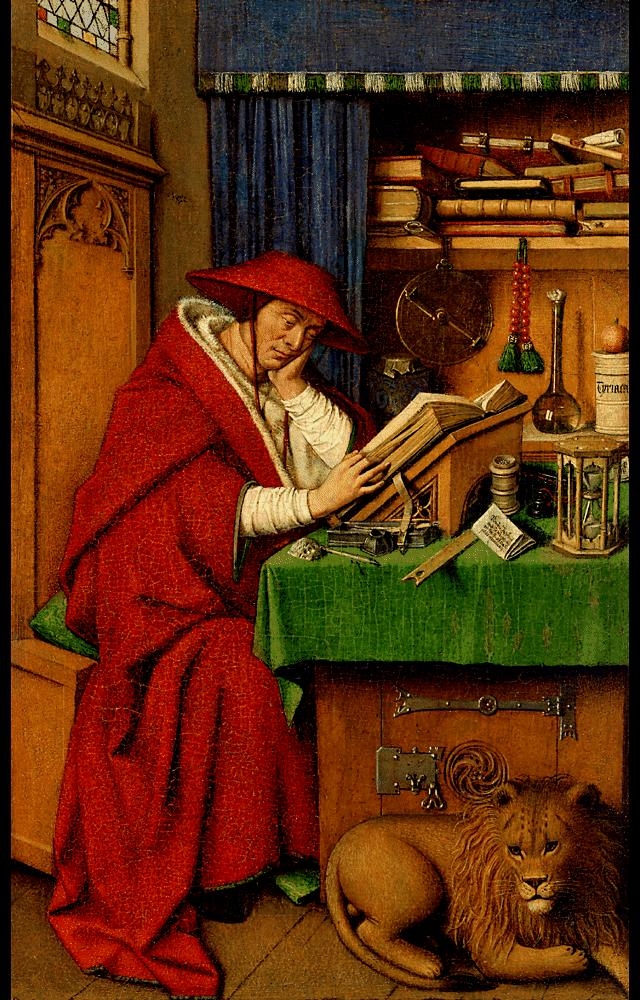
The above, actually only attributed to JvE, was a familiar subject in those days. Other fine examples are by Caravaggio and Carpaccio. I have high hopes for the National Gallery blockbuster opening at the end of November 2026, albeit there will only be nine pictures so early lunch.