
Museum shops are splendid places to go shopping, particularly for sculptures.
I have two Degas equine sculptures. The one above is cast from the same mould as the bronze original at the Met in New York and has a stamp on the base indicating it is a fake in case I was thinking of passing it off as an original. In a sense all Degas’ bronzes are fake. His sculptures were never exhibited in his lifetime.
“Upon Degas’s death in 1917, more than 150 figurative sculptures were found in his studio. Most were made of fragile wax, clay, and plastiline (a wax- and oil-based modeling material). Many had deteriorated. Only a few were preserved in copies that had been cast from them in plaster. Except for the wax Little Fourteen-Year-Old Dancer (Washington: NGA) none of these sculptures had been publicly exhibited during the artist’s lifetime.
Although Degas had not favored reproducing his sculptures in more permanent materials, his heirs authorized that copies be cast in bronze in order to preserve the compositions and to sell them as finished works. Paul-Albert Bartholomé, a sculptor and Degas’s longtime friend, prepared 72 of the figures for casting, a process executed by the distinguished Paris foundry A.-A. Hébrard et Cie. The quality of the Degas bronzes was tightly controlled and their edition was limited. Only twenty-two editions of the series of 72 figures were cast. Each bronze within the series was assigned a number from one to seventy-two. The first twenty editions were assigned a letter from A-T. In most cases these numbers and letters were incised on the individual bronzes.” (Metmuseum.org)
Degas follows in the steps of Leonardo da Vinci and Michelangelo in being a sculptor and a painter. Another is Landseer, whose lions in Trafalgar are iconic, though I do rather feel a lion is a lion and depicted in bronze don’t reveal much personality.
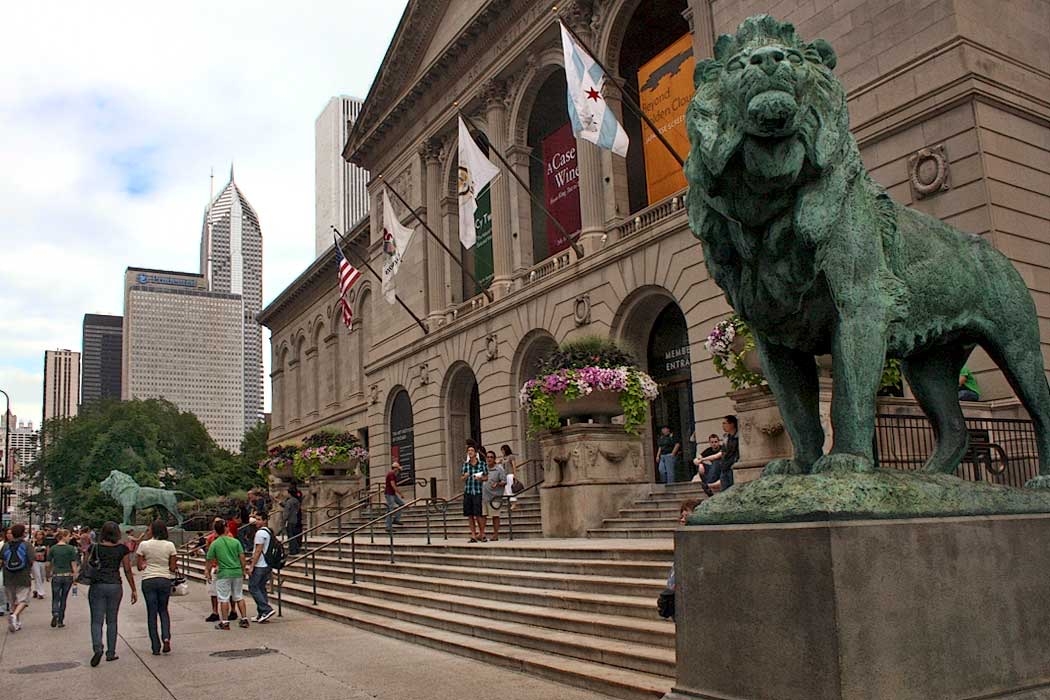
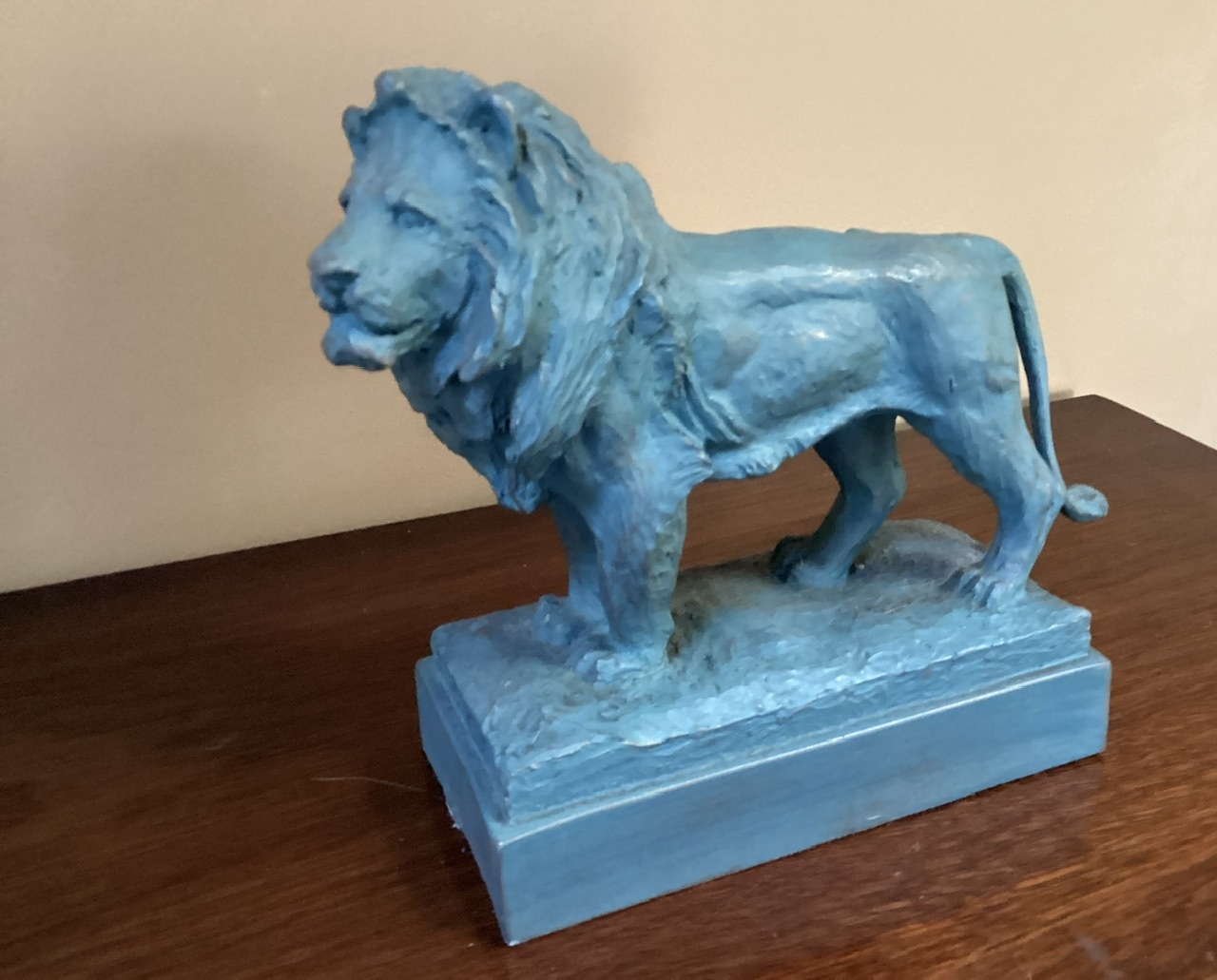
This pair of lions in Chicago weigh two tons apiece . Fortunately they are sold in the museum shop scaled down and cast in resin. I have one.
Walking in Holland Park yesterday I came across this bronze on loan from the Tate by an artist/painter I had not heard of: John MacAllan Swan.

It is not a style I warm to. If you don’t want to call it kitsch call it mawkish – they seem to mean the same – and I can see why the Tate are happy to lend it. But it doesn’t do Swan justice.
“A master of the oil, water-colour and pastel mediums, an accomplished painter and a skilful draughtsman, he ranked also as a sculptor of ability, having worked in nearly every material. He treated the human figure with notable power, but it was by his representations of the larger wild animals, mainly the felidae, that he chiefly established his reputation.” (Wikipedia)
”Felidae” was a new one for me and I had to look it up.