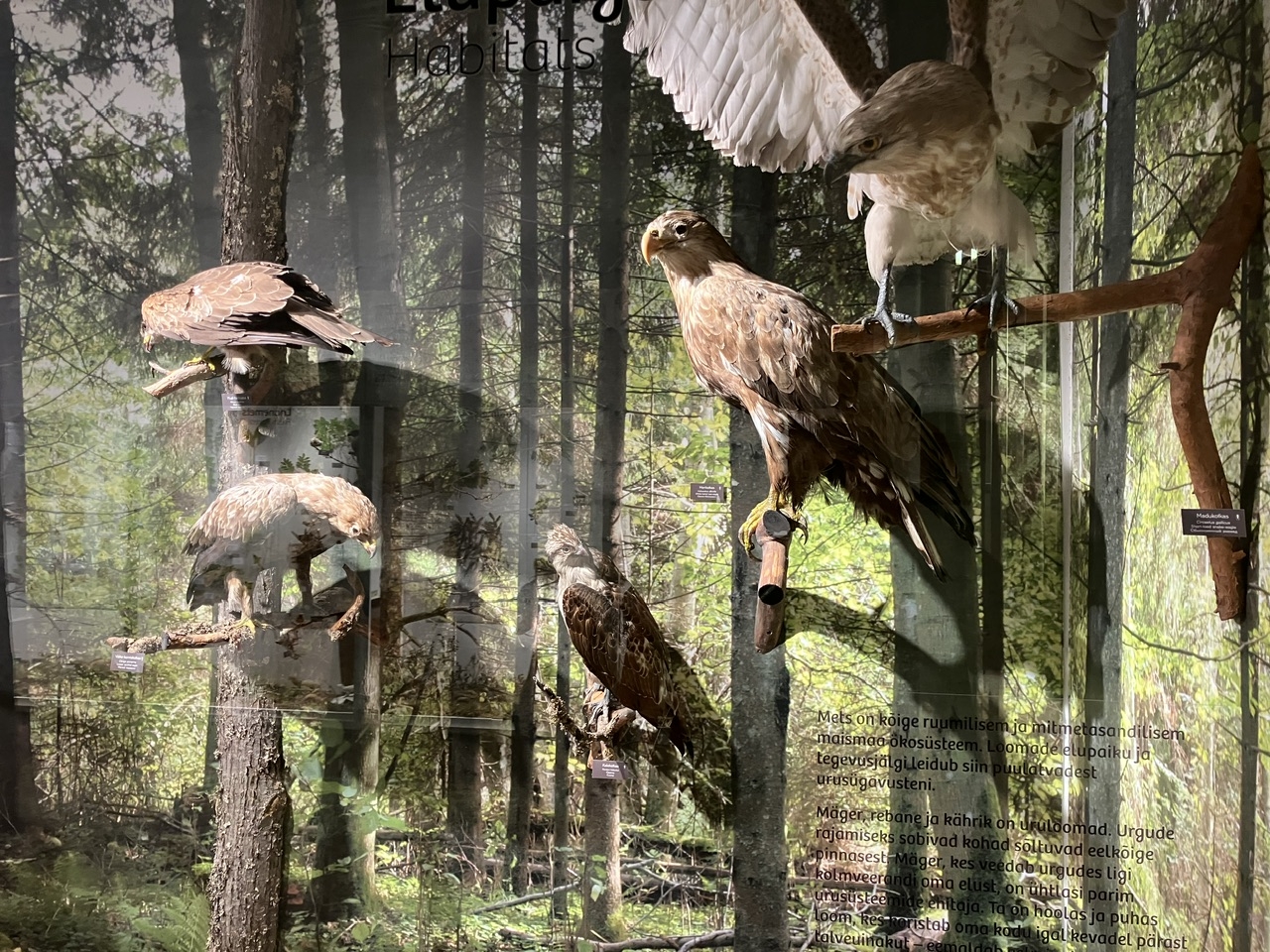
Unless you are David Attenborough you will find it convenient to see all the flora and fauna of Estonia without leaving Tallinn Old Town at the Museum of Natural History.
It’s on a different scale to the one on the Cromwell Road, thank goodness. In addition to the f and f there is geology and a room devoted to bogs. In Estonia they don’t shoot snipe and they certainly don’t use peat to fuel power stations. Seventy years ago 40% of Irish electricity was generated from peat and it made an ugly blot on the landscape in the centre of Ireland. It is only since the end of 2023 that the use of peat has ended. Here bogs are treasured. One of the best bogs, Viru, is only an hour’s drive south of Tallinn and has walking trails and plenty of signage. I don’t think chest waders are necessary.

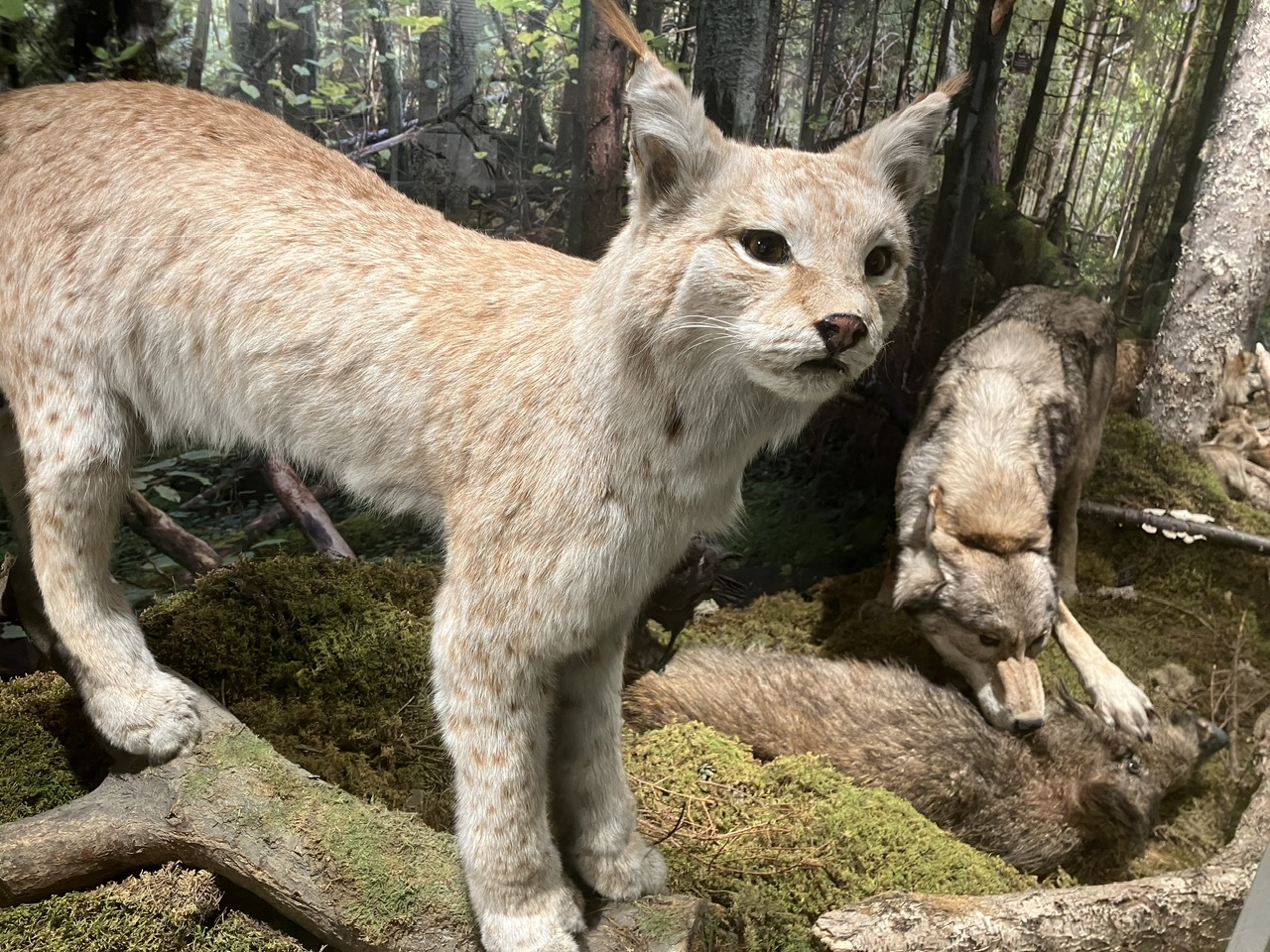
There is a good selection of large stuffed mammals: bear, lynx, moose, wolf, deer. I have only seen wolves in the wild once, though it’s debatable how wild they were. I was in the south of Ethiopia in the highlands where wolves live. Today they are Africa’s most endangered carnivore with a population of only about five hundred. They can’t have been so rare in 1998 because I saw at least half a dozen, attracted by seeing a vehicle and expecting some food to be offered.
Near the bookshop you cannot miss this bronze of Jaan Kross (1920 -2007), celebrated Estonian writer. Like so many Estonians of his generation he did not have an easy life.
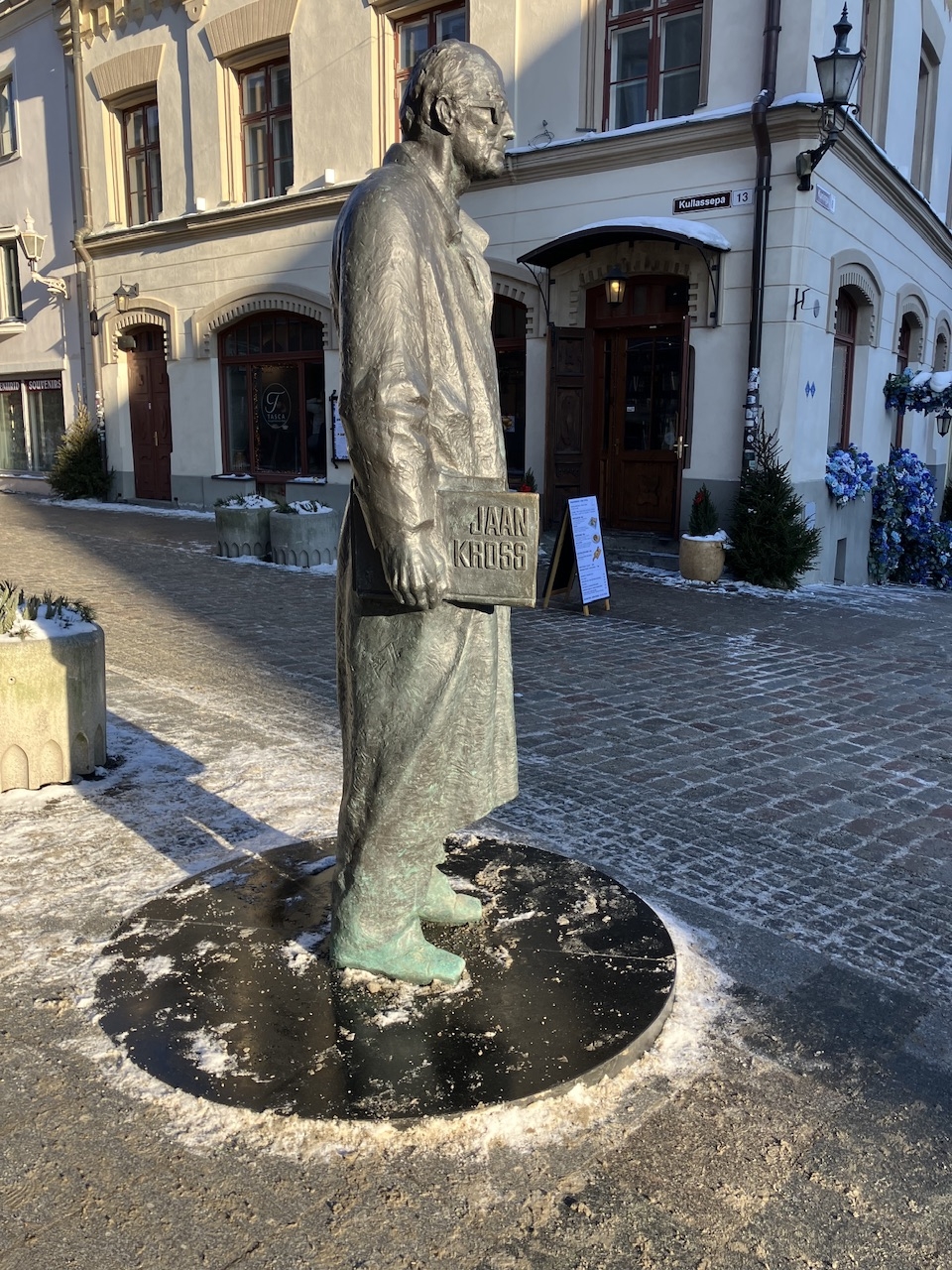
“In 1940, when Kross was 20, the Soviet Union invaded and occupied the three Baltic countries: Estonia, Latvia and Lithuania; imprisoned and executed most of their governments. In 1941, Nazi Germany invaded and took over the country.
Kross was first arrested by the Germans for six months in 1944 during the German occupation of Estonia (1941–1944), suspected of what was termed “nationalism”; that is, promoting Estonian independence. Then, on 5 January 1946, when Estonia had been reconquered by the Soviet Union, he was arrested by the Soviet occupation authorities, who kept him a short while in the cellar of the local NKVD headquarters, then kept him in prison in Tallinn, finally in October 1947, deporting him to a Gulag camp in Vorkuta, Russia. He spent a total of eight years in this part of North Russia, six working in the mines at the Minlag labour camp in Inta, then doing easier jobs, plus two years still living as a deportee, but not in a labour camp. Upon his return to Estonia in 1954 he became a professional writer, not least because his law studies during Estonian independence were now of no value whatsoever, as Soviet law held sway.” (Wikipedia)
I love The Whistler and his Dog – how clever of you to have found that!