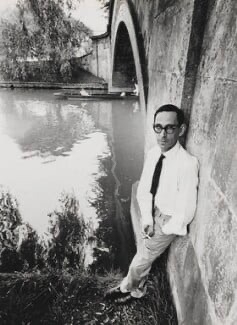
Francis Haskell was at Eton in WW II.
Eton was far too influential to be requisitioned by the military as many others were, and the privations and shortages of war were hardly noticeable. The school had always taken a somewhat Spartan approach to its pupils – no heating, little hot water, and scarcely edible food – so fuel shortages and rationing made scant difference. Francis’s main concern was that the war would last so long that he might end up having to fight in it, but by 1944 the end was in sight, and by then he realised he was going to be drafted anyway. So he focused instead on learning the art of survival in a hostile environment. He had been miserable at his prep school, to which he was sent away as a boarder at the age of 8, and for the first three years he hated Eton even more.
This was inevitable. The school was an institution dedicated to producing a ruling caste and did not value intellectuality overmuch – ‘its boys are not chosen for their intelligence . . .’ Francis had none of the qualities of the natural leader of men, was not interested in sports, and had little in common with most of his fellow pupils. They came from the ranks of the aristocracy, the landed gentry, politics or the professions, while he was the grandson of an Iraqi Jew and the son of a dilettante ballet critic. But eventually he made enough friends to make life tolerable, and in the last year was almost happy, although depression and fear were never far beneath the surface.
Apart from the normal miseries of school life, the whole period was blighted by his first experience of anti-Semitism. While at prep school near Margate his nominal religion had mattered little and he was brought up in an entirely secular environment, knowing far more about Christianity than he did about Judaism. But Eton, where he went in September 1941, was different and the experience marked him deeply, his fears re-emerging unpredictably in the decades that followed. On VE Day, 8 May 1945, for example, the whole school erupted with singing, drinking and festivities to celebrate: ‘At 10.15 we went out to see the bonfire lit on Fellow’s Eyot. It was a wonderful sight and there were also some fireworks. The mob spirit, however, rather spoiled things, because several people were thrown in the river, and I was frightened there would be a “Jews!”cry . . .’
He had reason to be afraid , as periodically the sportier variety of pupil would go on a Jew hunt, taunting them and throwing them into the Thames.
(Parallel Lives, A Love Story from a Lost Continent, Iain Pears)

He must have been a year below my father (Babbington Smith’s) who was himself a gentle soul, so I’d like to imagine they made friends. It’s so annoying when old people die because you can’t then ask them interesting questions or tell them things they would enjoy!