Today marks the 34th anniversary of the Restoration of Independence in Estonia following four years of non-violent demonstrations in the Baltic States, known as The Singing Revolution.
Gaining independence at the end of the First World War was not so peaceful. When German forces withdrew from Estonia at the end of 1918 the Red Army invaded. Estonia’s war for independence lasted until the signing of the Treaty of Tartu in February 1920.
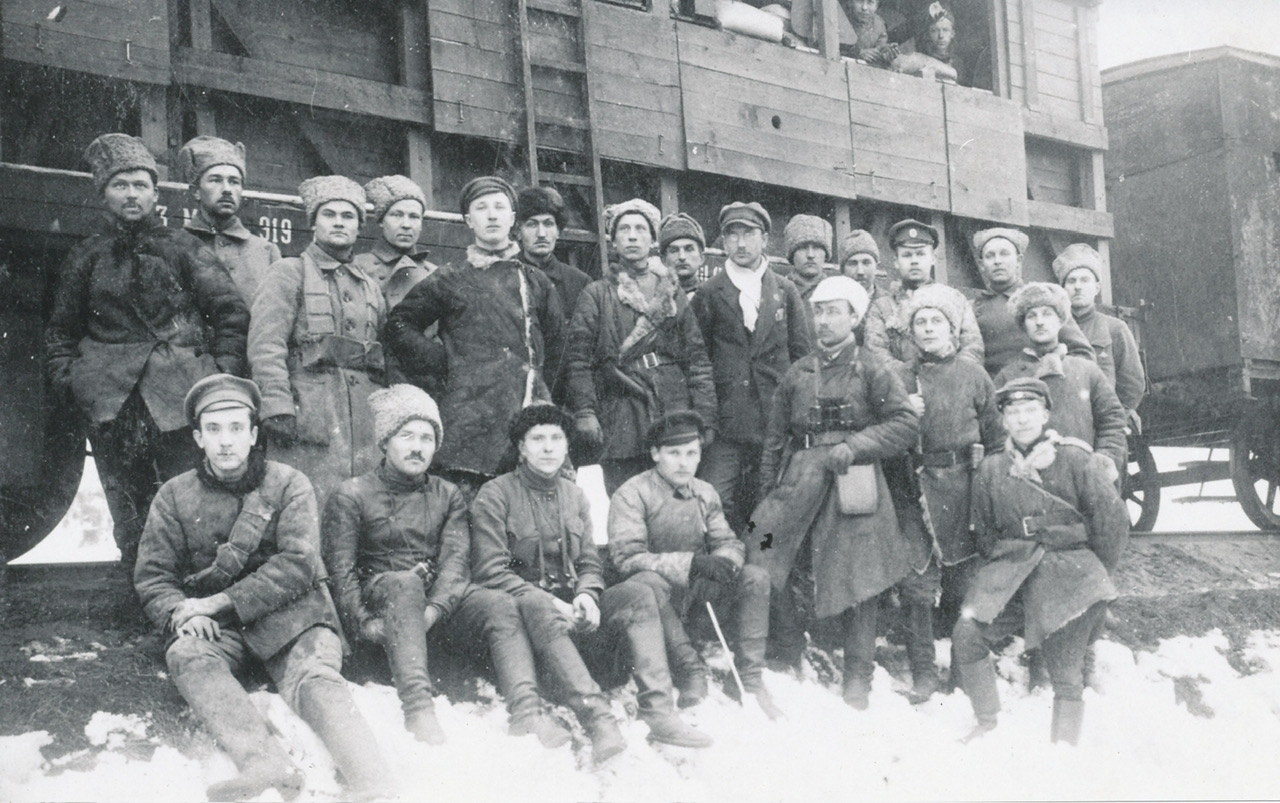
I wonder if David Lean saw this photograph when he was making Dr Zhivago? Estonia in 1918 was in a similar position to Ukraine a century later; both invaded by a neighbour with greater military capability.
“Estonian military forces at the time consisted of 2,000 men with light weapons and about 14,500 poorly armed men in the Estonian Defence League. The end of November 1918 saw the formation of the Baltic Battalion, primarily a mounted machine-gun company plus infantry. Estonia’s Baltic German minority provided a sizable troop of volunteer militia for the Battalion, which was one of the first fighting units of the Estonian Army, and maintained staunch loyalty to the authority of the Republic” (Wikipedia). Estonia did not have to fight alone for long.
“On 5 December, Finland delivered 5,000 rifles and 20 field guns along with ammunition.
A British Royal Navy squadron commanded by Rear Admiral Sir Edwyn Alexander-Sinclair arrived at Tallinn on 31 December and delivered 6,500 rifles, 200 machine guns, and two field guns. The squadron captured two Russian destroyers, Spartak and Avtroil, and turned them over to Estonia, which renamed them Vambola and Lennuk.
On 2 January, Finnish volunteer units with 2,000 men arrived in Estonia. Three armoured trains were built in Tallinn under the command of sea captain Johan Pitka and Captain Karl Parts.” (Wikipedia)
“Admiral Sir Edwyn Sinclair Alexander-Sinclair, GCB, MVO (1865 – 1945) was a Scottish Royal Navy officer, notable for firing the first shots of the Battle of Jutland, and for leading a squadron of light cruisers in the Baltic to support independence of Estonia and Latvia in 1918 to 1919.” (Wikipedia)
Alexander-Sinclair commands respect in Estonia to this day. Ten years ago a bronze bust on a granite plinth was unveiled in Tallinn but I prefer this portrait by Francis Dodd.

Much credit for the recognition today of the British contribution to the Estonian War of Independence lies with the 13th Earl of Carlisle. Lord Carlisle speaks Estonian and taught at the University of Tartu. He is an expert on the Baltic States and the President of Estonia made him a Knight 1st Class of the Order of the Cross of Terra Mariana. It was his initiative to erect memorial plaques honouring the 118 British personnel (112 Royal Navy) who died in 1919; one is in Portsmouth Cathedral.
Excellent piece… especially the video of the journalist.Thank you for the past and present historical content which puts today firmly in context.☘️
Returned from a wedding in Latvia yesterday. Population approx 1.85 vs Estonia at 1.4m. To the east there are probably a total of about 400k Russians who apparently show their inclinations by not speaking Latvian or embracing it. The indigenous Latvians who see Russia coming over the borders have in the main moved to Finland or similar. The rest will defend their country they say and are proud and determined. It is thought that there are close to 50,000 Latvians in Siberia in villages who cannot return home. No smoke without fire but impossible to tell. The Latvians who have emigrated speak of post Putin and of renewed imperialist ambitions at that time. Sweden and Finland have a joint defence strategy where they are in accord. Kaliningrad must be like a Belisha beacon to Moscow.
Despite his orders from the Admiralty which limited the Sixth Light Cruiser Squadron to a coastal reconnaissance, my grandfather in H.M.S. Cardiff, with H.M.S. Caradoc and five destroyers, shelled the Bolsheviks’ rear near Narva on 13th December,1918. According to the naval historian Geoffrey Bennett, in Cowan’s War , the story of British naval operations in the Baltic, 1918-1920, “British naval gunfire against shore targets has seldom been more effective; it destroyed the only bridge across the river on the Estonian frontier, cutting the Bolsheviks’ lines of supply from Petrograd. This had the immediate result of stemming their progress westward.”
To my mind, the best portrait of my grandfather is the one in “Some Sea Officers of the Great War”, the group portrait of 22 admirals painted after the war by Sir Arthur Cope, of which I possess the study. The impressive group portrait itself now hangs in the hotel Raffles at the OWO in Whitehall, on loan from the National Portrait Gallery.