I visited the churches mentioned by James Lees-Milne in his guide Roman Mornings when I last visited in 2017 but here is no shortage of churches in Rome and yesterday I went to some I had not been to. The only challenge was to work out a circular walk and to factor in lunch.
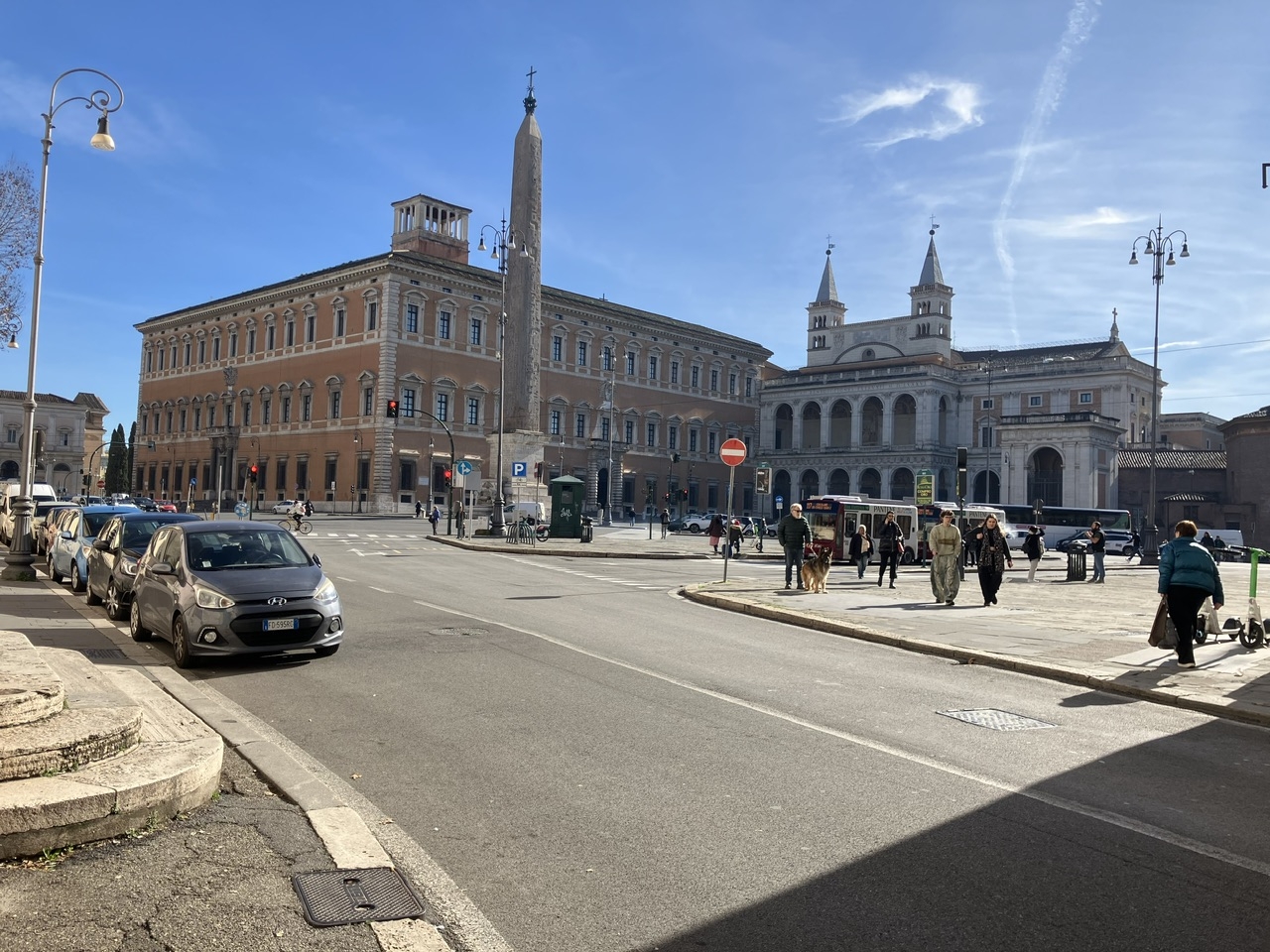
First stop, the Archbasilica of Saint John Lateran, founded in 324, that is adjacent to the Lateran Palace. The palace is where the Lateran Treaty was signed in 1929 in which uncertainty surrounding the status of the Papal States was resolved. They were inevitably signed away to Italy. King Victor Emmanuel III and Prime Minister Benito Mussolini and the Holy See under Pope Pius XI did the signing. What was left is the Vatican State and what you can see above. No sign of a Swiss Guard though.
That is not the only peculiarity here. There is just one honorary canon and has been since the reign of Henry IV (1589 – 1610), so ex officio, and that is France’s Head of State. I don’t suppose President Macron is aware of this honour. The palace was the where the Pope lived for about a thousand years, from around 400. But we must walk around to the church entrance.

Even in January parts of Rome are crowded: long queues for the Vatican Museum and Saint Peter’s and the Borghese Gallery is booked at least until the end of next month. As you can see no queues here, just a perfunctory baggage search (tent, right) by the Carabinieri and then a truly magnificent interior.


Not far away is the elegant, small Church of Saints Marcellinus and Peter ‘al Laterano’. It is 18th century built on a cross plan surmounted by a dome.

As it happens it was closed in the middle of the day and I don’t think the inside is exceptional, so on to the next one, also closed, Santa Prassede, early medieval with much to see, at least according to the description posted outside.

Fortunately Santa Maria Maggiore is only a minute away. This dates from 434 and is another property of the Holy See, like Saint John Lateran.

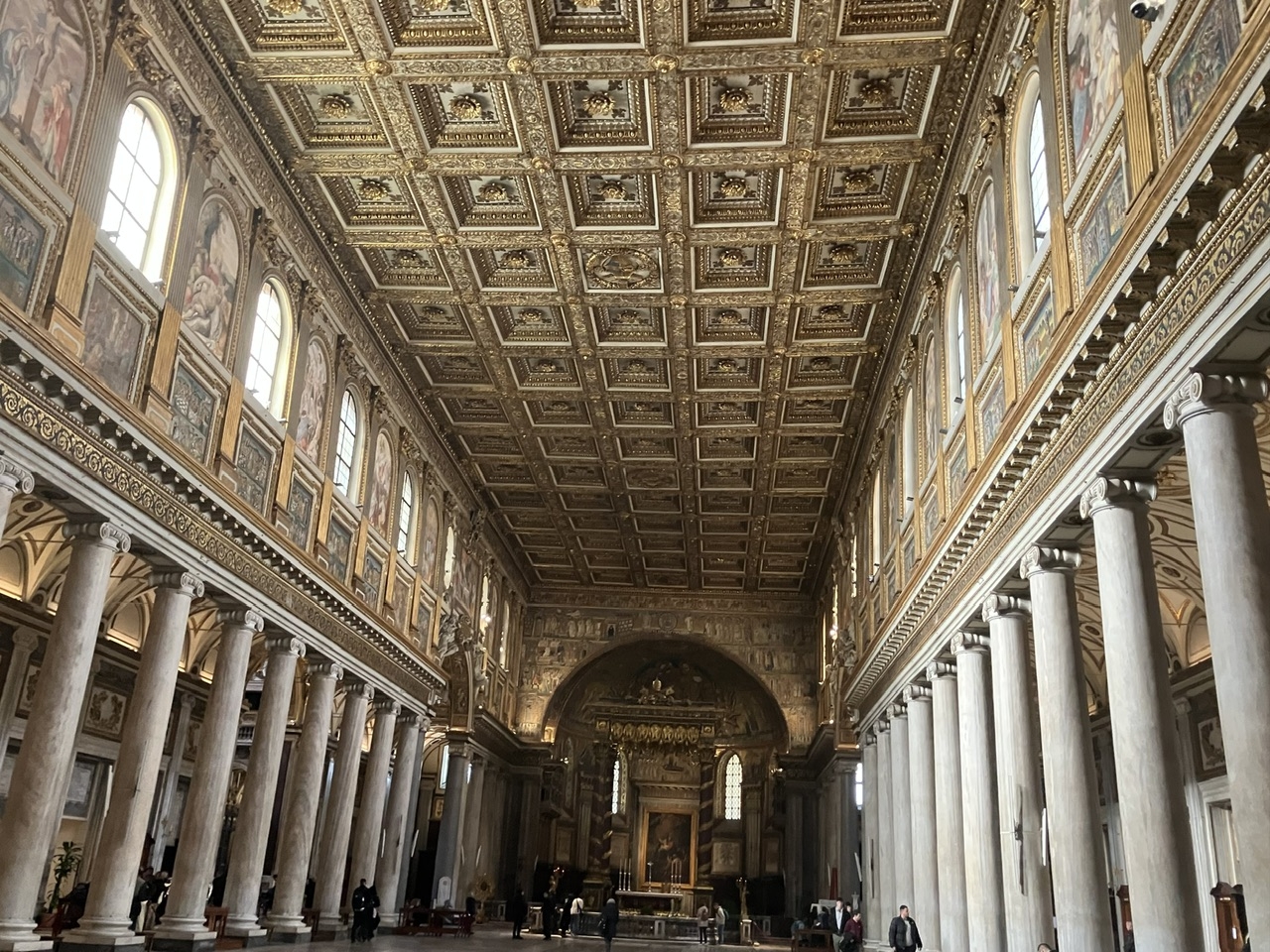
Again, free of crowds and with a breath-taking interior and too much history to easily absorb. Best to wander round and admire, I decided.
It is raining rather heavily this morning which may curtail today’s perambulation. That reminds me of Jack Aubrey’s favourite joke. Why is the shortest watch called the dog watch? Because it is curtailed.
Thank you Christopher, as so often, a tour de force.